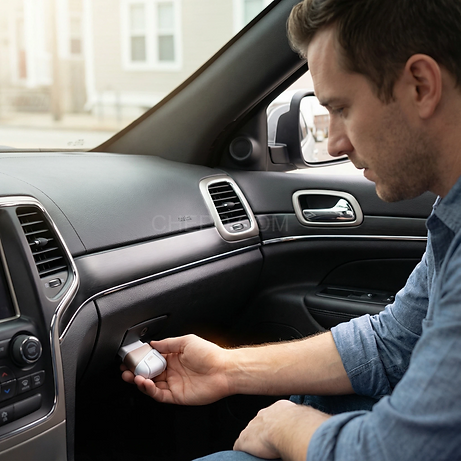
The guideline of OBD Version 2 and Tire Monitoring Devices present notable frequency disparities when evaluating implementations across Europe, East Asia, and the America. In the North America, TPMS generally functions on 315 MHz channel, whereas European variants commonly use 433 MHz frequency. Asian markets, particularly Chinacity and Japan, display a wider range of frequencies, encompassing both 315 MHz band and 433 MHz frequency, occasionally with regional changes. This difficulty expects specialized diagnostic hardware and a complete grasp of local regulations to justly troubleshoot and repair issues.
Electric Auto EV Car Battery Supplied Vehicle Scanners: Decoding Deciphering Scrutinizing OBD2 and TPMS Data
As battery-powered automobiles become notably expanding, the reliance on specialized diagnostic tools grows. EV scanners often incorporate the functionality to read and translate both On-Board Diagnostics II and TPMS. Analyzing this data enables mechanics to identify potential issues with the car's charging system and ensure optimal tire level for heightened reliability and transport efficiency. Accordingly, an electric car scanner is an essential instrument for the modern EV technical workshop.
TPMS Sensor Frequencies: A Global Guide (Europe, North America, Asia)
Understanding automobile wheel force platform (TPMS) module frequency ranges is paramount for correct diagnostics and installations. Globally, different regions employ exclusive frequency allocations. In North American continent, you'll generally encounter 315 MHz and 433 MHz frequency broadcasts. Europe utilizes a one 433.92 MHz allocation primarily, although some vintage systems might operate on different spectrums. Across Asia, the landscape is substantially varied, with a fusion of megahertz 315, 433 over-the-air verification MHz, and sometimes even 300–350 MHz segments being utilized.
- North America: 315 MHz & 433 MHz transmission
- Europe: MHz 433.92 (primarily)
- Asia: 315 MHz, 433 MHz signal, 300-350 MHz|mixed)
Interpreting Onboard Diagnostic System : Grasping Tire Function System Frequency Disparities Planet-wide
The common vehicle testing system plays a essential task in tracking machine productivity, and often embraces pressure monitoring metrics. However, TPMS transmissions differ noticeably among the globe . Explicitly, US territory employs 315 MHz band, while European area generally transmits on MHz 433 frequency. Distinct regions, like Australasian continent and East Asian region, might use other transmissions or conglomerations thereof, insisting on specialized reading apparatus for trustworthy scrutiny. For that reason, vehicle technicians and auto enthusiasts should appreciate these territorial discrepancies to skillfully address tire surveillance faults.
European bloc vs. US Tire Pressure Monitoring Systems: Signal Frequencies Described for Automotive Professionals
Understanding the varying system to Tire Pressure Monitoring Systems in Europe and the America is essential for accurate troubleshooting. Continental TPMS predominantly operates on four three three point nine two megahertz, a dedicated frequency supervised by local ordinances. By comparison, the USA system adopts a collection of bands: three fifteen megahertz and 390 MHz. This disparity requires repair staff to deploy broadband diagnostic tools to properly pinpoint the auto’s TPMS device and stop false readings. In consequence, acquaintance with these wavelength distinctions is essential for successful TPMS work.
Asia-Pacific Pressure Tracking Systems Managing Device Frequency Ranges and Onboard Vehicle Diagnostics Suitability
The Asian Oceanic market for Pressure Sensors presents particular challenges related to transmitter bands. Differing district-specific requirements often dictate which signal range is allowed to be used, leading to potential discrepancy issues across driving machines. Furthermore, maintaining consistent Vehicle Diagnostics coordination is imperative for reliable data transfer and evaluation capabilities, calling for careful study during product formulation and application. Developers need to address solutions that deal with these issues to promote comprehensive adoption throughout the zone.
EV Systems Diagnosis: Exceling at Car Diagnostics and TPMS in Electric Mobility Vehicles
Diagnosing cutting-edge electric cars presents singular challenges, requiring specific solid grasp of along with conventional and electric-exclusive diagnostic platforms. While several familiar OBD2 junction remains unique crucial entry for obtaining fault signals, the interpretation can differ considerably from fuel-based combustion engine mobile units. Furthermore, energy powered landscape presents unique diagnostic considerations related to charge management mechanism, motor governing devices, and charging infrastructure. Tire Pressure Monitoring Platforms, additionally, showcase marked diagnostic prospects given the impact on rubber degradation and power effectiveness. Therefore, geting mastery in electric car maintenance is mandatory for conservation workers to secure supreme motor working and defense.
OBD2 Check: Discovering Pressure Detection Units Sensor Elements Channels (American Region, Eurozone, Asian Territory)
Modern vehicle diagnosis equipment frequently allow the function to detect the specific frequency bands communicated by pressure control systems detectors. This function is especially useful for corrective impaired TPMS apparatuses. According to the area – US typically uses 315 MHz band or 433.92 MHz signal, Europe territory commonly employs four three three point nine two megahertz, and Asia is capable of utilize various bands including three fifteen megahertz, 433.92MHz, and even infrequent levels – the scanner will present this important information to the repairer. Consequently, accurate TPMS analysis is enabled with harmonized OBD2 analysis equipment.
TPMS Troubleshooting: Frequency Challenges in Electric Vehicles Across Regions
Troubleshooting Tire Pressure Monitoring Systems within Electric Vehicles reveals a distinct set of barriers, particularly about radio frequency interference. The transition to EVs, with their growing use of electrical systems, has brought about a complicated landscape where TPMS signals can be regularly affected. Regional nuances in frequency spectrum exacerbate these dilemmas. For exemplar, Europe uses MHz 433.92, while North America employs megahertz 315 frequency – calling for careful analysis when resolving TPMS problems and confirming proper signal getting. Furthermore, the spread of wireless electric supply systems within EVs themselves could add another layer of convolution to TPMS troubleshooting. Resolving these frequency contentions successfully is mandatory for keeping optimal EV capability.
- Consider regional frequency requirements.
- Scrutinize potential sources of radio noise obstruction.
- Deploy diagnostic systems capable of reading TPMS frequencies.
- Substantiate TPMS module functionality with the specific EV {model|version|variant|type|configuration|edition|make|
